Dachshund Coat Types: Smooth, Longhair and Wire Basics
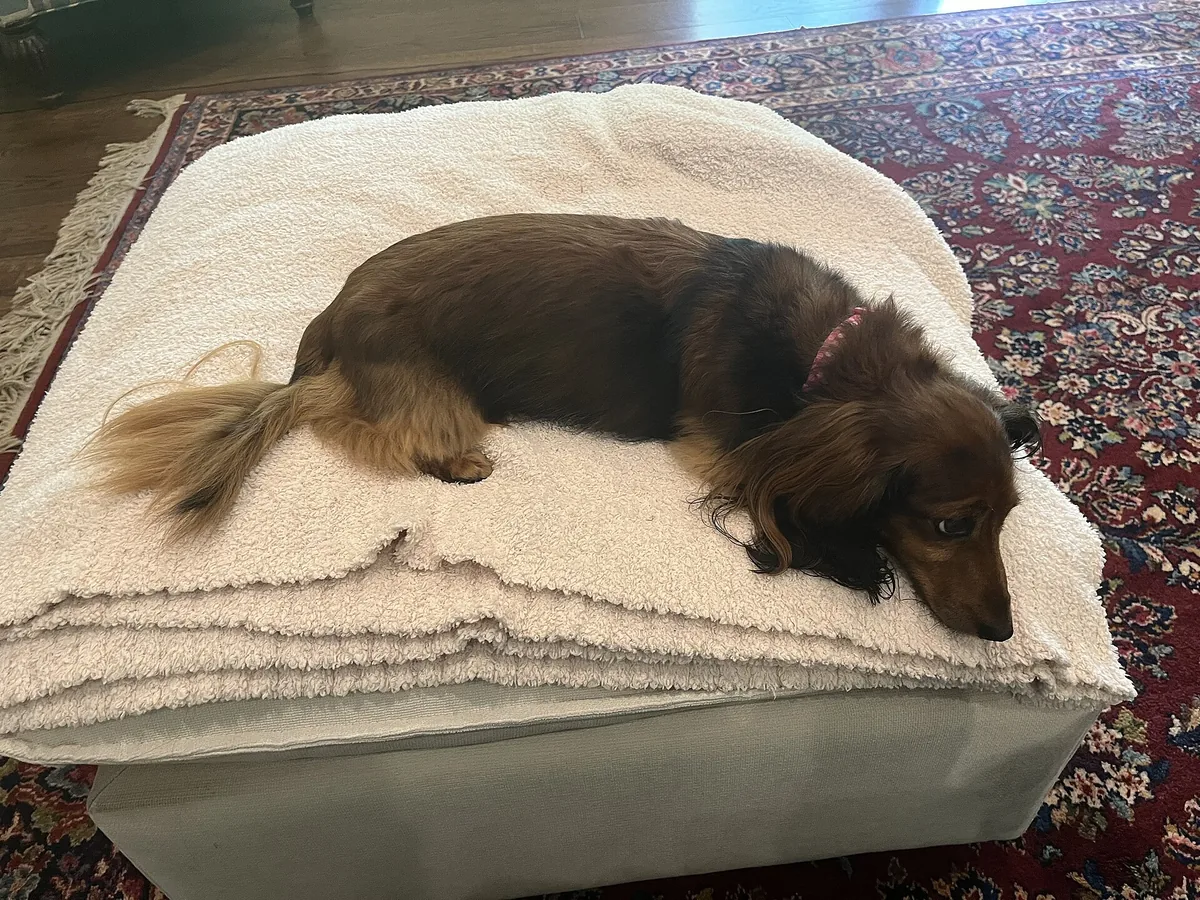
Photo: ScottCarammell via Wikimedia Commons, CC0
🐾 Getting ready for a puppy? Try the interactive Dachshund puppy checklist — free, no email required.
Dachshunds come in three coat varieties and two sizes. The AKC Official Standard of the Dachshund is the reference for what those coats should look like. This guide sticks to that language and everyday hygiene—not product rankings or shedding percentages.
Three varieties, one structure
Per the standard, the breed is shown as smooth, wirehaired and longhaired, in standard and miniature sizes. All varieties share the long, low, well-muscled outline. Coat is a variety difference, not a different breed.
Smooth
The standard calls for a short, smooth, shining coat that is neither too long nor too thick. Everyday care is usually a soft brush or rubber curry to lift dead hair and check the skin underneath.
Wirehaired
Wire coats should show a uniform tight, short, thick, rough, hard outer coat with a finer undercoat distributed between the coarser hairs, plus distinctive beard and eyebrows. Soft, curly or irregularly sticking hair is described as incorrect. Many owners work with a groomer who understands hand-stripping versus clipping for this variety—ask what preserves the coat your dog has, rather than chasing a trend.
Longhaired
Longhair should be sleek and glistening, often slightly wavy, longer under the neck and on the forechest, underside, ears and behind the legs, with an elegant outline. The standard faults coats that are too profuse, equally long everywhere, curly, or strongly parted on the back. Gentle detangling of feathering and drying after wet walks help prevent mats.
Nails, ears and skin checks
Short legs magnify nail length: keep nails trimmed so feet sit flat. Peek inside ears for wax, odor or redness. While you groom, run hands along the long back and ribcage—new lumps, hot spots or reluctance to be touched deserve a veterinary look.
When grooming becomes a vet visit
Persistent itch, greasy odor, hair loss, scabs or sudden coat change are medical questions, not DIY shampoo experiments. Ask your clinic before using leftover human products.
Coat variety is part of the look; lean body condition and back-aware habits still matter more for long-term comfort—see healthy weight and body condition.
Frequently asked questions
How many Dachshund coat types does the AKC recognize?
The AKC Official Standard describes three coat varieties—smooth, wirehaired and longhaired—shown in two sizes (standard and miniature). All three varieties must meet the same structural standard.
Does coat type change the weight standard?
No. The AKC size language (standard usually 16–32 pounds; miniatures compete at 11 pounds and under at 12 months and older) applies by size division, not by separate coat weight bands. Confirm body condition with your veterinarian.
How often should I groom?
Frequency depends on coat variety and lifestyle. Smooth coats need lighter brushing; longhair needs more attention to feathering; wire coats need care that protects the correct harsh texture. Ask a groomer familiar with the variety, and call your vet for skin odor, redness or itching.
Do nails and ears matter on a low dog?
Yes. Long nails change gait on short legs, and ears need regular peeks for odor or redness. Grooming is also a chance to notice lumps or sore spots early—report concerns to your veterinarian.
A quick note: this guide is general information from published sources, written by dog lovers, not a veterinarian. Your own vet knows your dog's history, so check with them before changing food, exercise or treatment.
Sources
Keep reading

Dachshund Weight by Age: Standard vs Miniature
What the AKC breed standard says about standard and miniature Dachshund weight, how to track growth with your vet, and why body condition matters more than a single number.
Keeping a Dachshund Lean: Body Condition Over the Scale
Why lean body condition matters for a Dachshund's long back—WSAVA BCS ideas, VCA obesity risks and ACVS weight notes, with portion changes guided by your vet.