Dachshund Weight by Age: Standard vs Miniature
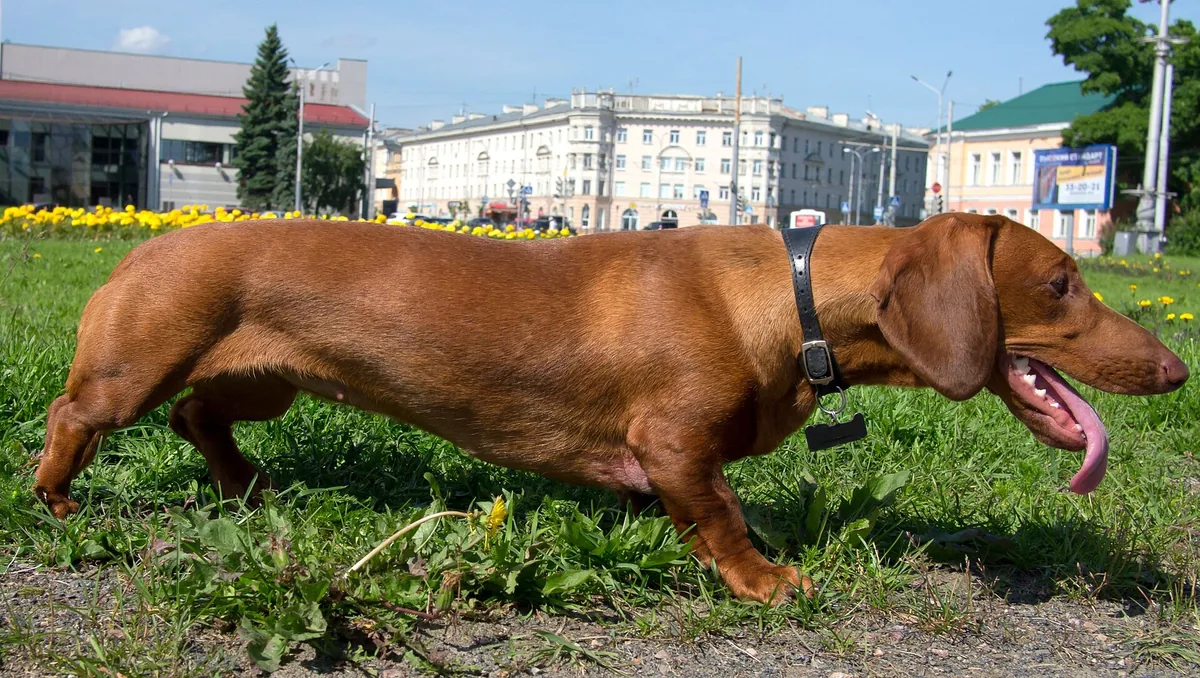
Photo: Thence5 via Wikimedia Commons, CC BY-SA 4.0
Dachshunds come in two sizes (standard and miniature) and three coat varieties (smooth, longhair, wire). Owners often want a single “correct” weight for every age. Breed standards do not work that way. This guide sticks to what the AKC Official Standard of the Dachshund actually says, then explains how to track growth with your veterinarian—without invented month-by-month charts.
What the AKC standard says about size
The AKC standard describes the Dachshund as low to ground, long in body and short of leg, with robust muscular development. On size it is specific:
- Standard: weight is usually between 16 and 32 pounds.
- Miniature: not a separate breed classification; miniatures compete in a class division for “11 pounds and under at 12 months of age and older.”
That language is about adult conformation classes—not a promise that every healthy adult will land on a single number, and not a growth calendar for puppies. The AKC Dachshund breed page also notes two sizes and three coat types.
Standard vs miniature (and what “tweenie” is not)
People sometimes call dogs between those bands “tweenies.” That nickname is informal. The AKC standard’s published size language is the two divisions above. If your adult dog sits outside the usual ranges—or you are unsure whether you have a standard or miniature—ask your veterinarian (and, if you show, your breed club) rather than relying on social-media labels.
Coat type (smooth, longhair, wire) does not create separate official weight bands in the AKC size language quoted above.
Puppy growth: track trends, not internet charts
There is no official AKC month-by-month Dachshund weight table in the breed standard. Puppies grow at different rates. Research such as Salt et al. (2017) in PLOS ONE discusses growth-standard charts for monitoring bodyweight in dogs as a general research topic—not a DIY diagnosis tool for one breed.
Practical approach with your vet:
- Weigh on the same scale when you can, and write the date and number down.
- Bring the log to wellness visits.
- Ask your vet to score body condition (see the WSAVA Dog Body Condition Score chart), not only the scale number.
- Follow your vet’s feeding plan. VCA’s feeding-growing-puppies overview is general education; your puppy’s plan is individual.
Adult weight and body condition
A lean adult in the usual size band is not the same thing as an overweight dog who still “looks cute.” Extra fat is harder to see on a long, low dog. VCA’s obesity overview explains why excess weight matters for dogs generally.
For Dachshunds specifically, disc disease is a major breed topic. The American College of Veterinary Surgeons (ACVS) notes that Dachshunds account for a large share of disc-rupture cases and lists weight loss among lifestyle changes after IVDD care. That is not a claim that every heavier dog will have a disc crisis—it is a reason to keep body condition on the wellness agenda with your veterinarian.
What this guide does not do
- It does not predict adult weight from a puppy weigh-in.
- It does not invent weekly “target” pounds.
- It does not replace a veterinary exam, nutrition plan or diagnosis.
If your Dachshund’s weight, appetite or energy changes suddenly, call your veterinarian.
Sources
See the source list in the article metadata (AKC standard and breed pages, WSAVA BCS, VCA feeding and obesity pages, Salt et al. 2017, ACVS IVDD overview).
Frequently asked questions
How much should a standard Dachshund weigh?
The AKC Official Standard of the Dachshund states that weight of the standard size is usually between 16 and 32 pounds. Individual dogs vary; ask your veterinarian what a healthy weight looks like for your dog.
How much should a miniature Dachshund weigh?
Per the AKC standard, miniatures compete in a class division for 11 pounds and under at 12 months of age and older. Miniatures are not a separate AKC breed classification; they are a size division. Confirm your dog's target with your vet.
Is there an official month-by-month puppy weight chart for Dachshunds?
The AKC breed standard defines adult size ranges, not a month-by-month growth table. Growth varies by individual. Salt et al. (2017) published research on growth-standard charts for dogs in general; your veterinarian is the right person to interpret serial weigh-ins for your puppy.
Does coat type (smooth, longhair, wire) change the weight standard?
The AKC Dachshund standard describes three coat varieties and two sizes. The published weight language applies to the sizes (standard vs miniature), not separate weight bands by coat. Discuss body condition with your vet.
Why does weight matter so much for Dachshunds?
Extra weight loads a long back. VCA notes obesity as a risk enhancer for disc disease in predisposed breeds, and ACVS lists weight loss among lifestyle changes after IVDD. Keeping a lean body condition is one topic to discuss with your veterinarian, not a substitute for veterinary care.
A quick note: this guide is general information from published sources, written by dog lovers, not a veterinarian. Your own vet knows your dog's history, so check with them before changing food, exercise or treatment.
Sources
- AKC: Official Standard of the Dachshund (PDF)
- AKC: Dachshund breed information
- AKC: Breed Weight Chart
- VCA Animal Hospitals: Obesity in Dogs
- VCA Animal Hospitals: Feeding Growing Puppies
- WSAVA: Dog Body Condition Score chart
- Salt et al. (2017): Growth standard charts for monitoring bodyweight in dogs, PLOS ONE
- ACVS: Intervertebral Disc Disease
Keep reading

IVDD and Back Problems in Dachshunds: Vet-Sourced Guidance
What intervertebral disc disease (IVDD) means for Dachshunds, signs to watch for, and when to call your veterinarian—based on ACVS, VCA and peer-reviewed research.


Dachshund Back-Safe Exercise, Stairs and Ramps
How to think about Dachshund exercise, stairs and furniture ramps using ACVS, VCA and peer-reviewed lifestyle research—without inventing prevention guarantees.