Keeping a Dachshund Lean: Body Condition Over the Scale
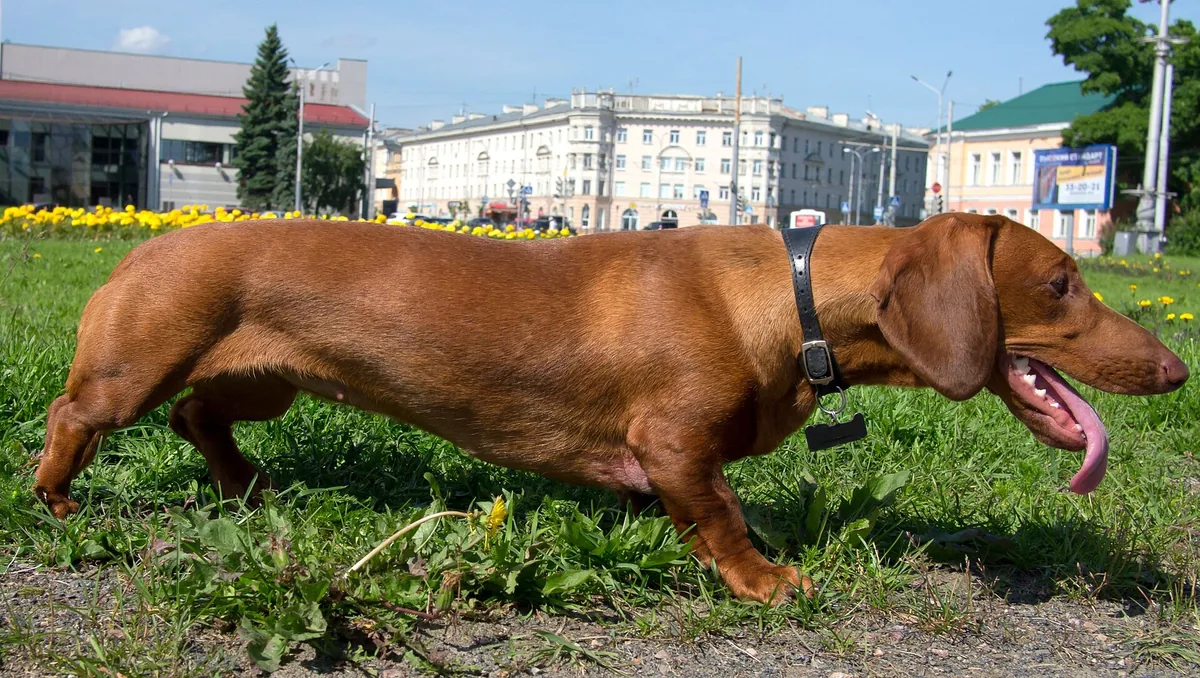
Photo: Thence5 via Wikimedia Commons, CC BY-SA 4.0
Dachshunds are food-motivated athletes of the long hallway. A small daily surplus adds up fast on a compact frame. This guide explains body condition and why lean living shows up in veterinary IVDD lifestyle advice—without turning the kitchen scale into a diagnosis.
Educational only. Ask your veterinarian before changing food, calories or exercise.
Start with size language, then look at the dog
The AKC standard places standard Dachshunds usually between 16 and 32 pounds; miniatures compete at 11 pounds and under at 12 months and older. Those ranges are not a month-by-month growth chart. Salt et al. (2017) researched growth-standard charts for dogs in general; your vet still interprets your puppy’s curve. Adult targets belong in weight by age.
Body condition score (BCS)
The WSAVA dog BCS chart helps owners and clinics describe ribs, waist and abdominal tuck. Feel the ribs under a light fat cover; look for a waist from above. “Looks cute and round” can still be overweight on a dachshund silhouette.
Why lean shows up in back conversations
ACVS lists weight loss among lifestyle changes after IVDD care, alongside harness use and minimizing furniture jumps. VCA obesity explains that excess weight is a chronic inflammatory state linked to shorter lifespan and orthopedic disease. Disc disease in Dachshunds has strong breed factors (see IVDD guide); leanness is still a reasonable, vet-guided goal—not a prevention promise.
Portions and treats
Measure meals. If you switch foods, recalculate with the new label’s calories under veterinary guidance. AAHA Table 6 supports keeping treat calories a small fraction of the day’s intake. Puzzle toys and scent games can replace some calorie-dense handouts.
Track, then ask the vet
Record dated weights (our /tools/weight-journal/ stores observations only). Bring the log to wellness visits. Sudden appetite loss, rapid weight change or reluctance to move needs prompt veterinary care—not a DIY calorie spreadsheet.
Frequently asked questions
Is the scale enough to judge a healthy Dachshund weight?
Scale weight helps, but body condition score (BCS) describes fat cover and muscle. WSAVA publishes a dog BCS chart used worldwide. Your veterinarian interprets serial weigh-ins and BCS together—especially on a long, low breed where "a few pounds" is a large percent of body mass.
Why does leanness matter for backs?
ACVS lists weight loss among lifestyle changes after IVDD care. VCA describes obesity as a common preventable disease that predisposes dogs to orthopedic problems and shortens life. Extra weight loads a long spine; keeping lean is one conversation with your vet, not a guarantee against disc disease.
How many treat calories are reasonable?
AAHA nutrition guidance commonly frames treats as a small share of daily calories (often discussed around ≤10% of the day's intake). Ask your vet how treats fit the calorie plan for your dog's food.
Should I cut food on my own if ribs feel soft?
Do not invent a crash diet. Bring a weight log and BCS notes to your veterinarian and change portions only with their plan. Our observation-only weight journal can store dated readings to take to the appointment.
A quick note: this guide is general information from published sources, written by dog lovers, not a veterinarian. Your own vet knows your dog's history, so check with them before changing food, exercise or treatment.
Sources
Keep reading

Dachshund Weight by Age: Standard vs Miniature
What the AKC breed standard says about standard and miniature Dachshund weight, how to track growth with your vet, and why body condition matters more than a single number.


IVDD and Back Problems in Dachshunds: Vet-Sourced Guidance
What intervertebral disc disease (IVDD) means for Dachshunds, signs to watch for, and when to call your veterinarian—based on ACVS, VCA and peer-reviewed research.