IVDD and Back Problems in Dachshunds: Vet-Sourced Guidance
Please see your vet. This guide is general education, not a diagnosis or treatment plan. If your Dachshund seems unwell, call your veterinarian. If it looks like an emergency, go to an emergency vet right away.
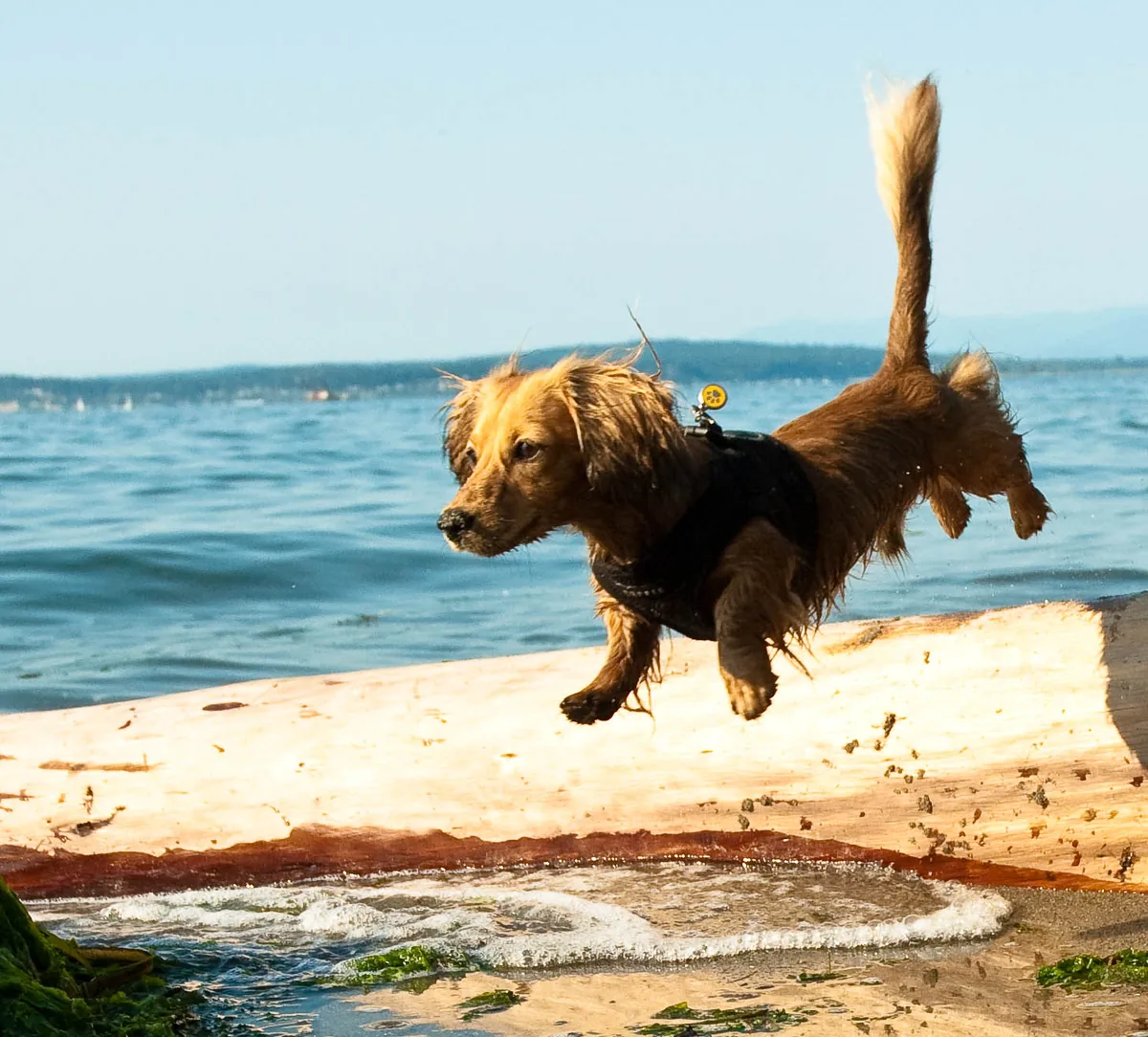
Photo: Dan Bennett via Wikimedia Commons, CC BY 2.0
Dachshunds were shaped for underground work: long body, short legs, bold heart. That same build is tied to a well-documented spinal vulnerability—intervertebral disc disease (IVDD). This guide summarizes what major veterinary sources say. It is general education, not a diagnosis or treatment plan. If your dog is in pain, weak, or unable to walk, seek veterinary care now.
What IVDD is
ACVS explains that intervertebral discs can swell or rupture. Ruptured material can compress and concuss the spinal cord. Damage ranges from mild incoordination to inability to walk to loss of pain perception—which ACVS notes can carry a guarded to poor prognosis depending on duration.
VCA’s degenerative disc disease overview describes the disc as having a tough outer ring and a softer center. Degeneration can lead to rupture; material often moves toward the spinal cord, which cannot step aside inside the bony canal. VCA emphasizes that a minor jump is sometimes blamed, but chronic disc degeneration is usually already underway.
Why Dachshunds are overrepresented
ACVS states that chondrodystrophoid breeds (including the Dachshund) account for the vast majority of disc ruptures, with the Dachshund accounting for about 45–70% of all cases in that overview. Average onset of clinical signs in these dogs is often between 3–6 years, though disc calcification can appear on radiographs earlier. Thoracolumbar (back) discs account for about 65% of ruptures; cervical (neck) discs up to about 18%.
VCA’s cervical disc page notes that long-backed, short-legged breeds such as the Dachshund experience faster disc deterioration than many other breeds, and that studies in Dachshunds have shown a possible genetic component.
Peer-reviewed work supports a genetic contribution to disc calcification, a related marker. Jensen and Christensen (2000) estimated heritability of disc calcification in wirehaired Dachshund families at roughly 0.60–0.87 depending on scoring method.
Packer et al., DachsLife 2015 (open access) surveyed owners of 2,031 Dachshunds. Among veterinarian-diagnosed cases, overall IVDD prevalence was 15.7% (95% CI 14.1–17.3), with significant differences by variety (highest in standard smooth-haired in that sample; lowest in standard wire-haired). The authors also discuss relative risk estimates from earlier literature and stress that lifestyle associations from a cross-sectional survey can reflect reverse causality.
Signs owners should not ignore
ACVS describes a common progression:
- Back or neck pain; refusal to move around normally
- Wobbly “drunken sailor” hind-end gait; crossing hind feet
- Loss of hind-limb motor function (often with urination problems)
- Loss of pain perception (severe cord injury)
VCA notes stages from mild pain through paralysis with or without deep pain sensation, and that some dogs progress from walking to total paralysis in less than one hour. Neck lesions often present with severe pain; back lesions more often with paralysis with or without obvious pain.
Emergency cues: sudden inability to walk, dragging legs, crying in pain, knuckling, loss of bladder control, or a rigid/hunched posture—contact a veterinarian or emergency clinic immediately. Do not wait to see if it passes.
How veterinarians evaluate and treat (high level)
Only a veterinarian can diagnose. ACVS lists workups that may include bloodwork, spinal radiographs, myelography, CT and/or MRI. Treatment depends on neurologic grade: ACVS notes conservative cage rest and pain medication may be offered for recent first episodes with mild deficits; surgical decompression is often recommended when function is more seriously affected. Prognosis language on the ACVS page varies with whether pain perception remains—read that page with your vet, not as DIY triage.
VCA similarly stages disease and discusses medical vs surgical paths. Aftercare commonly includes rest, pain control, and sometimes bladder care and rehabilitation. ACVS mentions postoperative lifestyle changes such as weight loss, switching to a body harness instead of a neck lead, and minimizing jumping off furniture. Recurrence of another disc later in life is discussed in the ACVS overview (about 25% in that text)—again, individual risk is a veterinary conversation.
What owners can discuss with their vet (without promising prevention)
- Body condition and weight (see our weight guide)
- Harness vs collar for walks (VCA cervical page advises harness rather than a leash on a collar for cervical disc patients; ACVS mentions harness after IVDD care)
- How to limit high-impact jumps off furniture
- What exercise is appropriate for this dog’s neurologic status
Packer et al. found associations (for example, shorter daily exercise associated with higher IVDD odds in univariable analysis) but explicitly caution that reverse causality is plausible—owners may change lifestyle after diagnosis. Treat survey associations as questions for your vet and for future research, not as guaranteed prevention rules.
What this guide does not do
- Diagnose your dog or recommend a specific surgery
- Invent success rates beyond what cited sources state
- Replace emergency care
Sources
ACVS IVDD page; VCA degenerative disc disease and cervical disc disease pages; Packer et al. 2016 (DachsLife 2015); Jensen and Christensen 2000; AKC CHF IVDD overview; AKC Dachshund breed page.
Frequently asked questions
What is IVDD in Dachshunds?
IVDD means intervertebral disc disease—degeneration and displacement of the cushioning discs between vertebrae so that disc material can compress the spinal cord or nerves. ACVS and VCA describe how chondrodystrophoid breeds such as the Dachshund are heavily overrepresented among disc-rupture cases. Only a veterinarian can evaluate your dog.
How common is IVDD in Dachshunds?
ACVS states that Dachshunds account for about 45–70% of all disc-rupture cases in their overview. Packer et al. (DachsLife 2015) reported an overall veterinary-diagnosed IVDD prevalence of 15.7% in a large owner survey of Dachshunds (with important variety and age differences). Figures vary by study design; they are not a personal risk score for your dog.
What signs mean I should call the vet right away?
ACVS describes a progression from back or neck pain and reluctance to move, to a wobbly drunken-sailor gait, to loss of hind-limb motor function and, in severe injury, loss of pain perception. VCA notes some dogs can go from walking to total paralysis in less than an hour. Difficulty walking, paralysis, or sudden severe pain are emergencies—contact your vet or an emergency clinic immediately.
Is IVDD inherited?
Disc calcification—a related risk marker—has a strong genetic component in Dachshunds. Jensen and Christensen (2000) estimated heritability of disc calcification around 0.60–0.87 depending on the scale used. Packer et al. discuss multifactorial risk (genes plus environment). Breeding decisions belong to responsible breeders working with veterinary guidance; this article is not breeding advice.
Can lifestyle prevent IVDD?
No guide can promise prevention. ACVS mentions lifestyle changes such as weight loss, a body harness instead of a neck lead, and minimizing jumping off furniture after IVDD care. Packer et al. found lifestyle associations in a cross-sectional survey but warned about reverse causality—so those findings are hypothesis-generating, not a guarantee. Ask your veterinarian what is appropriate for your dog.
A quick note: this guide is general information from published sources, written by dog lovers, not a veterinarian. Your own vet knows your dog's history, so check with them before changing food, exercise or treatment.
Sources
- ACVS: Intervertebral Disc Disease
- VCA Animal Hospitals: Degenerative Disc Disease in Dogs
- VCA Animal Hospitals: Cervical Intervertebral Disc Disease in Dogs
- Packer et al. (2016): DachsLife 2015 — lifestyle associations with IVDD risk in Dachshunds
- Jensen & Christensen (2000): Inheritance of disc calcification in the dachshund, J Vet Med A
- AKC Canine Health Foundation: Overview of Intervertebral Disk Disease (IVDD)
- AKC: Dachshund breed information
Keep reading
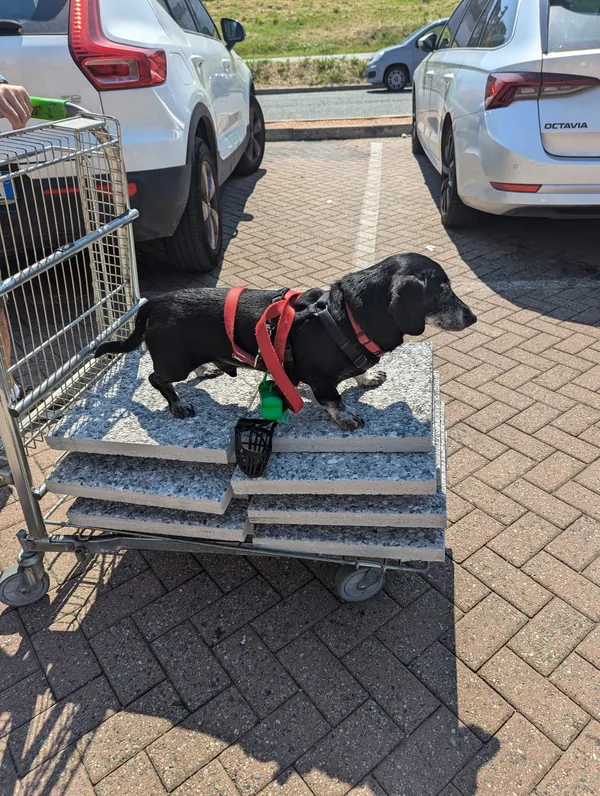
Dachshund Back-Safe Exercise, Stairs and Ramps
How to think about Dachshund exercise, stairs and furniture ramps using ACVS, VCA and peer-reviewed lifestyle research—without inventing prevention guarantees.


Dachshund Weight by Age: Standard vs Miniature
What the AKC breed standard says about standard and miniature Dachshund weight, how to track growth with your vet, and why body condition matters more than a single number.