Home › Training, Behavior & Exercise
Dachshund Back-Safe Exercise, Stairs and Ramps
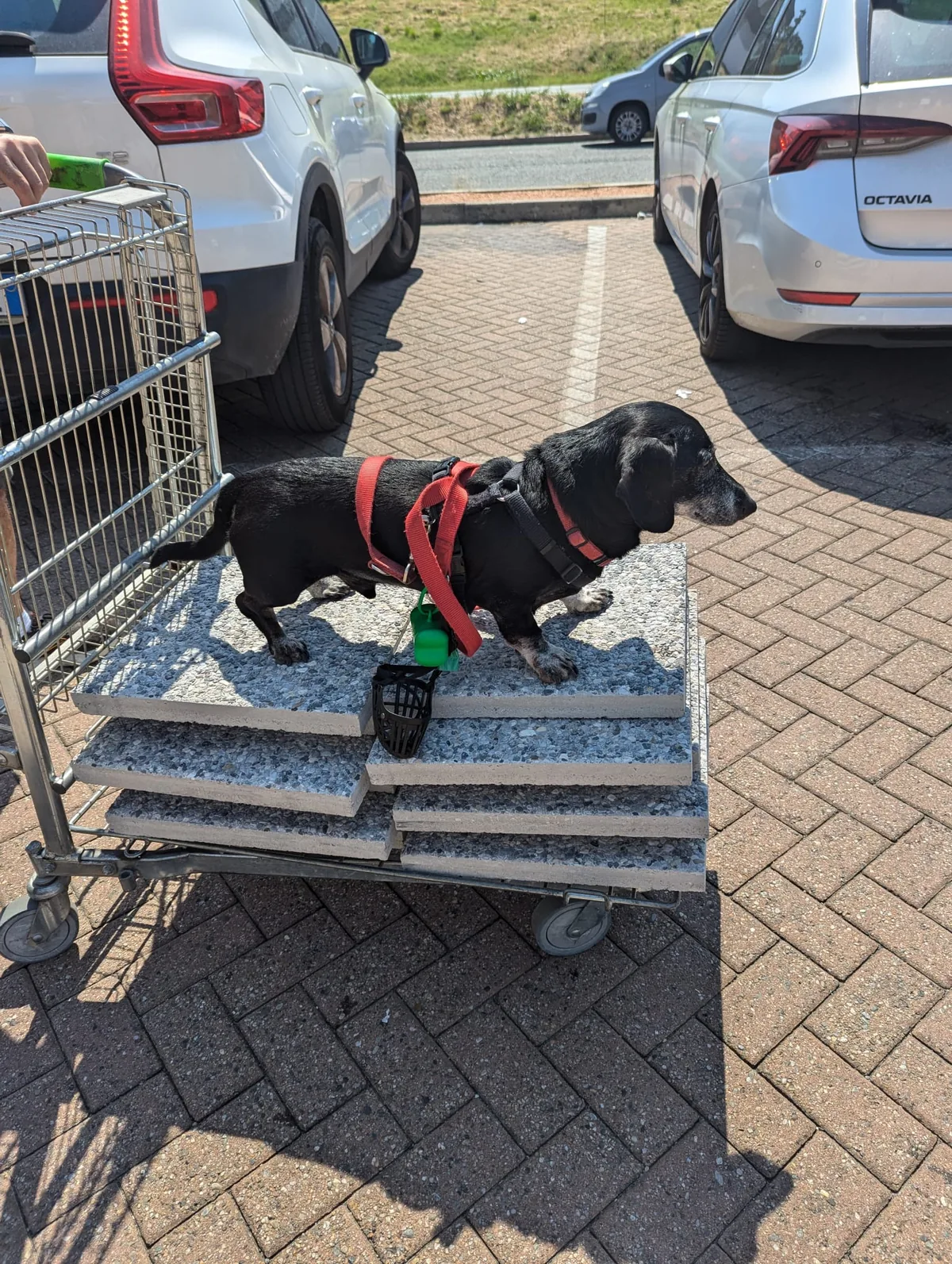
Photo: Guzzi01 via Wikimedia Commons, CC BY 4.0
Dachshunds were bred to work—nose down, body long, courage high. Modern pet life adds stairs, sofas and weekend hikes. This guide explains what reputable veterinary and research sources say about exercise, stairs and ramps, and where the evidence is associative rather than proven prevention. It is educational only.
Start with the dog in front of you
A neurologically normal adult, a post-operative IVDD patient, a young puppy and a senior with hind-end weakness are not the same athlete. ACVS discusses exercise restriction (bed rest) after surgical management and lifestyle changes afterward. If your dog is painful, knuckling, reluctant to jump, or recovering from disc disease, your veterinarian’s plan overrides any general article.
What ACVS and VCA say about everyday mechanics
On the ACVS IVDD page, lifestyle changes after care include:
- Weight loss when needed
- Switching to a body harness instead of a neck lead
- Minimizing jumping off furniture
VCA’s cervical disc disease page notes that obesity and repeated traumatic events in predisposed breeds may enhance disc-disease risk, recommends harness walking rather than a collar-and-leash for affected dogs, and describes strict rest for 3–6 weeks after a disc event (with or without surgery) before activity is increased under veterinary guidance.
None of that is a claim that furniture caused every disc rupture—VCA’s degenerative disc overview stresses underlying degeneration—but it is a clear signal that high-impact landings and excess weight belong on the wellness conversation.
Stairs: what research actually supports
Owners often hear “never use stairs” or “stairs are fine.” Published work is more nuanced.
- Jensen and Ersboll (2000) examined mechanical factors related to disc calcification (not identical to clinical IVDD) in Dachshunds. That line of research is frequently cited when discussing moderate activity and stair use in context—not as a viral rule for every household.
- Packer et al., DachsLife 2015 found lifestyle associations with veterinary-diagnosed IVDD in a large cross-sectional survey. Stair-related findings were not as strong as some other variables at their stringent significance threshold; the authors emphasize reverse causality (owners may change habits after diagnosis).
- A 2025 Dog Aging Project analysis in JAVMA examined demographic and lifestyle characteristics and owner-reported IVDD across tens of thousands of companion dogs. Large observational studies can show associations; they do not prescribe a single stair policy for your dog.
Practical framing for a vet visit: describe your home (flights vs one step), whether your dog bounds or walks, and any prior back episodes. Ask whether controlled stair use, carrying on stairs, or a baby-gate plan fits this dog.
Ramps and furniture
Ramps and steps for beds/sofas are popular because they reduce repeated drop-landings. That aligns with ACVS language about minimizing jumping off furniture after IVDD care. Choose a stable ramp with enough length for a low dog, introduce it with treats, and still supervise. A ramp is a tool—not proof you have “IVDD-proofed” a genetically predisposed breed.
Building a back-aware exercise routine (when cleared)
For dogs your veterinarian considers appropriate for normal activity:
- Prefer regular, moderate movement over rare exhausting weekends. Packer et al. saw higher IVDD odds with very short daily exercise in univariable results—and lower odds with longer exercise—while warning those patterns may reflect post-diagnosis lifestyle changes.
- Warm up with a few minutes of easy walking before play.
- Avoid forced high jumps onto hard landings, wrestling that twists the spine, or “exercise punishment” after a painful episode.
- Use a harness if your vet prefers it for your dog’s neck/back status.
- Keep body condition lean (see our weight guide); excess weight is repeatedly discussed as a risk enhancer in veterinary disc-disease material.
- Stop and call the vet for yelping, hunched posture, hind-end weakness, or refusal to climb.
Scent walks, gentle training games and controlled off-leash time in safe areas often suit a hunter nose better than repetitive ball-flinging that encourages abrupt stops and twists—again, individualize with your vet and trainer.
Puppies and seniors
Growing skeletons and aging joints change the plan. Puppy exercise should follow veterinary guidance (not social-media minute rules as rigid law). Seniors may need shorter sessions, non-slip footing and help on stairs. Prior IVDD patients may need lifelong jump management.
What this guide does not do
- Promise that ramps or stair bans prevent IVDD
- Set a universal daily minute count
- Replace rehabilitation or neurologic care
Sources
ACVS IVDD; VCA cervical and degenerative disc pages; Packer et al. 2016; Jensen and Ersboll 2000; Dog Aging Project / JAVMA 2025 (doi:10.2460/javma.24.08.0553); AKC Dachshund breed page.
Frequently asked questions
Are stairs bad for Dachshunds?
It depends on the dog. Jensen and Ersboll (2000) studied mechanical factors and disc calcification in Dachshunds; moderate stair use has been discussed in that research context. Packer et al. (DachsLife 2015) found complex lifestyle associations and warned about reverse causality. Dogs with pain, weakness, prior IVDD or puppy/senior limitations need individualized veterinary advice—do not force a one-size rule from the internet.
Do Dachshunds need furniture ramps?
Ramps can reduce repeated high-impact landings from beds and sofas. ACVS lists minimizing jumping off furniture among lifestyle changes after IVDD care. Whether your healthy dog needs a ramp for every surface is a conversation with your veterinarian—not a universal mandate from this site.
How much exercise should a Dachshund get?
There is no single official daily minute count in the AKC breed standard. Packer et al. reported that dogs exercised under 30 minutes/day had higher IVDD odds in univariable survey analysis, while longer exercise associated with lower odds—but the authors caution reverse causality. Your vet should set limits if your dog has neurologic disease, is recovering from surgery, or is a growing puppy.
Harness or collar?
ACVS mentions switching to a body harness instead of a neck lead as a lifestyle change after IVDD. VCA's cervical disc page advises walking affected dogs on a harness rather than a leash attached to a collar. Ask your vet what fits your dog's neck and back status.
Can exercise prevent IVDD?
No article can promise prevention. Disc disease in Dachshunds has strong breed and genetic components (see our IVDD guide). Thoughtful exercise, lean body condition and fewer traumatic jumps are reasonable topics with your vet; they are not a cure-all.
A quick note: this guide is general information from published sources, written by dog lovers, not a veterinarian. Your own vet knows your dog's history, so check with them before changing food, exercise or treatment.
Sources
- ACVS: Intervertebral Disc Disease
- VCA Animal Hospitals: Cervical Intervertebral Disc Disease in Dogs
- VCA Animal Hospitals: Degenerative Disc Disease in Dogs
- Packer et al. (2016): DachsLife 2015 — lifestyle associations with IVDD risk in Dachshunds
- Jensen & Ersbøll (2000): Mechanical factors affecting intervertebral disc calcification in the dachshund
- Dog Aging Project / JAVMA (2025): Demographic and lifestyle characteristics and owner-reported IVDD (43,517 dogs)
- AKC: Dachshund breed information
Keep reading
IVDD and Back Problems in Dachshunds: Vet-Sourced Guidance
What intervertebral disc disease (IVDD) means for Dachshunds, signs to watch for, and when to call your veterinarian—based on ACVS, VCA and peer-reviewed research.


Dachshund Weight by Age: Standard vs Miniature
What the AKC breed standard says about standard and miniature Dachshund weight, how to track growth with your vet, and why body condition matters more than a single number.